

ETH Universe
What we built
We created the ETH Universe as a digital sandbox where we could test ideas in real-time without a rigid master plan, focusing on an open world where user behavior would dictate the direction. Grounded in the Ethereum mainnet, the experience started with NFTs as onchain identity, where users connected their wallets and brought their existing PFPs into the world to serve as their presence, utilizing ERC-6551 to allow those avatars to hold ships, assets, and achievements directly. To drive daily activity, we built a resource economy based on Stars, scarce items users had to earn and spend to create Doodles, and introduced structure through Weekly Winners with titles like "The Doodle Artist," "The Committed," and "The Star Gatherer" to recognize specific behaviors.
What worked (sustainable value)
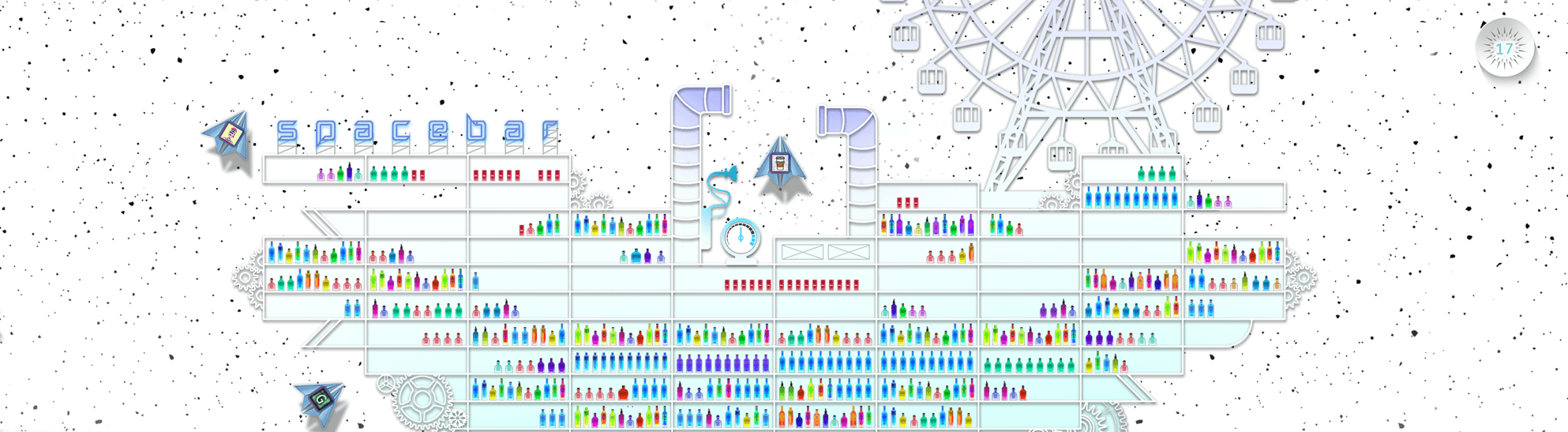
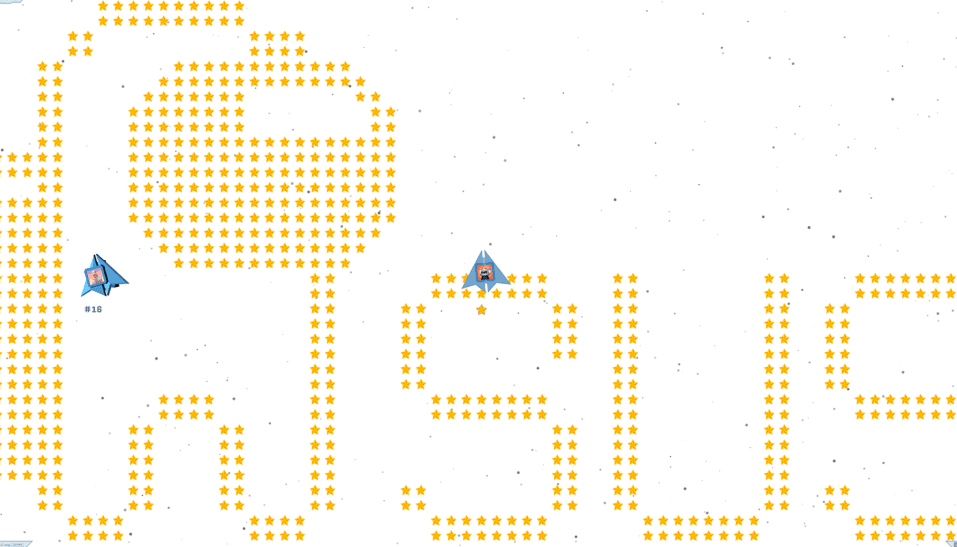
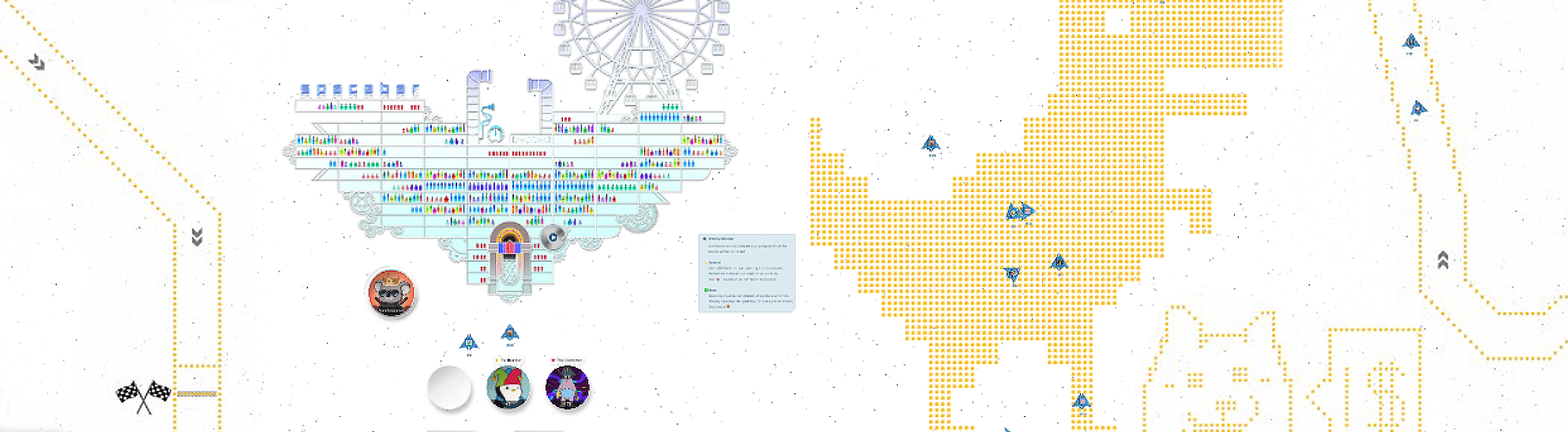
The most significant success was the Spacebar Race, an entirely unplanned phenomenon where users repurposed simple drawing tools intended for art to build complex racetracks, eventually organizing their own competitive leagues and streaming tournaments live on Discord. This proved that user-generated content could carry the ecosystem's engagement far better than developer-created content, as the community naturally evolved the tracks with curves and outlines without any technical updates from our side. Socially, the Spacebar Hangouts became a vital ritual, gathering everyone inside the universe for weekly updates, group screenshots in protoships, and race events, which transformed abstract wallet addresses into a tangible community. We also found deep engagement with Keys, soulbound tokens displayed in a user's Backspace, which validated that users deeply desire a permanent, visual history of their contributions and exploration.
What didn't work
Despite the strong conceptual foundation, the technical reality of Ethereum Mainnet crushed the user experience. High gas fees made minting Keys financially illogical for most, and the strict requirement to own an NFT and connect a wallet created a massive onboarding barrier that filtered out curious users before they could even start. Within the game loop, we discovered that the Doodle system had a hard ceiling because it relied too heavily on artistic skill; the same small group of talented users kept winning, leading to fatigue among the majority and making the economy difficult to balance. We also learned the hard way that forcing engagement doesn't work; by adhering to a strict calendar for Weekly Missions even when community energy was low, we turned what should have been exciting shared moments into routine chores that felt hollow.
What we learned
The experiment clarified that high-concept ownership is meaningless if the usability is too heavy. The failure of gas-heavy interactions on Mainnet directly informed our move to L2 solutions and our current obsession with gas-abstracted, seamless onboarding. We realized that our role is to provide flexible tools rather than rigid content, a lesson that directly shaped the transition from the crude racetracks of the ETH Universe to the sophisticated Squares system in Outer Space. Ultimately, the ETH Universe proved that our "software" that included the community culture, the rituals, and the core desire for digital identity was ready, but the "hardware" of Ethereum Mainnet was simply not the right environment for the high-frequency, low-friction interaction we needed to build a true digital state.